I have not had this conversation with clients because, let’s be honest, people who would rather run pictures of their rooms through AI websites don’t usually call me and want to pay me for my services. I’ve had this conversation with a few contractors, though. They’ve been frustrated by clients who show them an AI image of their kitchen and say “please quote this”.
That’s cool and all but it’s really just a look – and some of it might be defying the laws of physics! And I get it. AI interior design tools are pretty incredible. In a matter of seconds, you can upload a photo of your dated kitchen and see it transformed into something that looks like it belongs in a magazine. It’s exciting! It makes the possibilities feel endless, and I think there’s real value in helping people imagine what their homes could become.
But there’s a pretty big difference between imagining a beautiful room and actually creating one.
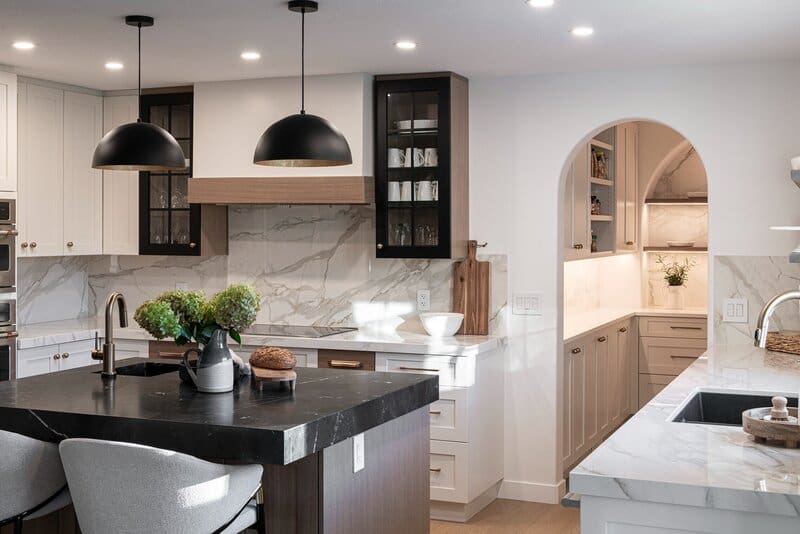
A Pretty Picture Isn’t a Design Plan
The reason that contractors love working with designers (i.e. me!) is because they’re not just getting a pretty picture and a hearty handshake from the designer. They’re getting a full set of construction drawings, complete with dimensions and materials, as well as a full specifications spreadsheet (often many pages long!) with all materials to be used.
This also includes the dirty little details that AI certainly doesn’t consider like colour of grout, tile edges, exact colour of finishes or whether that cabinet door is stained wood or a wood grain laminate.
Often, these decisions are not only influenced by look and feel but by the budget. If I know that your budget is not going to accommodate stained white oak cabinets, I’m not even going to show you that option and get your hopes up buuuut I will show you something that will achieve that look without sacrificing your kids’ college funds!
And those little details matter. A lot.
For example, an AI-generated kitchen might show beautiful cabinetry, an oversized island, and gorgeous pendant lights. But is there enough clearance to open the dishwasher while someone is standing at the sink? Is there room to pull out the stools without blocking the walkway? Where does the microwave go? Does the fridge door actually open all the way?
These aren’t particularly glamorous questions, but they’re the ones that determine whether your kitchen is going to function beautifully or drive you crazy every single day.
And believe me, a beautiful kitchen that doesn’t function properly gets old pretty quickly.
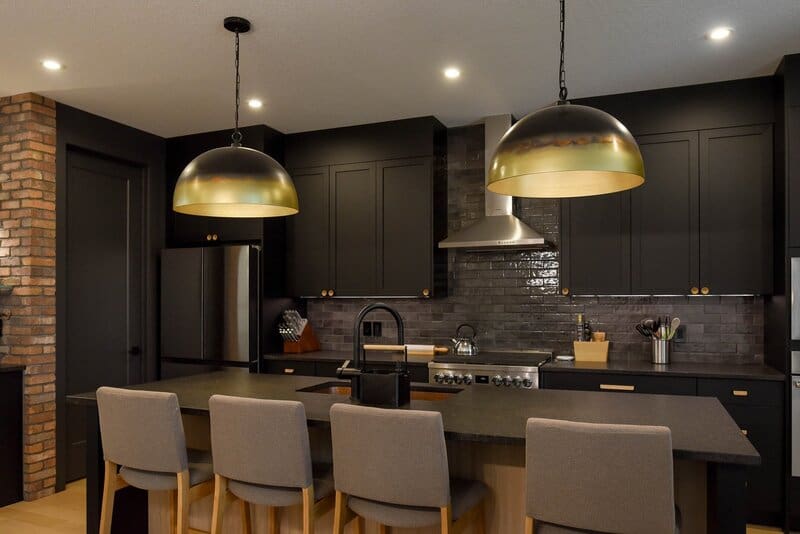
Does Hiring an Interior Designer Really Cost More?
Most people think that they’re hiring a designer for their creativity and their finger on the pulse of what is going on in the design world. They also believe that hiring a designer is going to make the project muuuuch more expensive.
I once had a client tell me that her friend at the gym said that if she hires a designer, she can “kiss $60,000 goodbye, off the top”. I had a few follow-up questions to say the least.
I typically end up saving my clients money, especially if we’re considering the time that they would have to spend driving all over the city, looking for finishes and figuring out what they like, what goes well together, and what the price would be of that pretty picture that AI spat out in 5 seconds.
There’s also the cost of mistakes. Ordering the wrong size vanity, selecting tile that isn’t appropriate for the application, or discovering halfway through construction that the beautiful layout you imagined doesn’t actually work can get expensive. Really expensive.
A designer’s job is to anticipate as many of those issues as possible before construction starts. We work through the details, coordinate with trades, research products and make decisions that take both your budget and the realities of construction into consideration.
Of course, hiring a designer is an investment, and I’m certainly not suggesting that every project requires one. But the idea that adding a designer automatically adds an enormous amount of money to a renovation is simply not true. Sometimes having someone who knows what they’re doing is actually the more economical option.
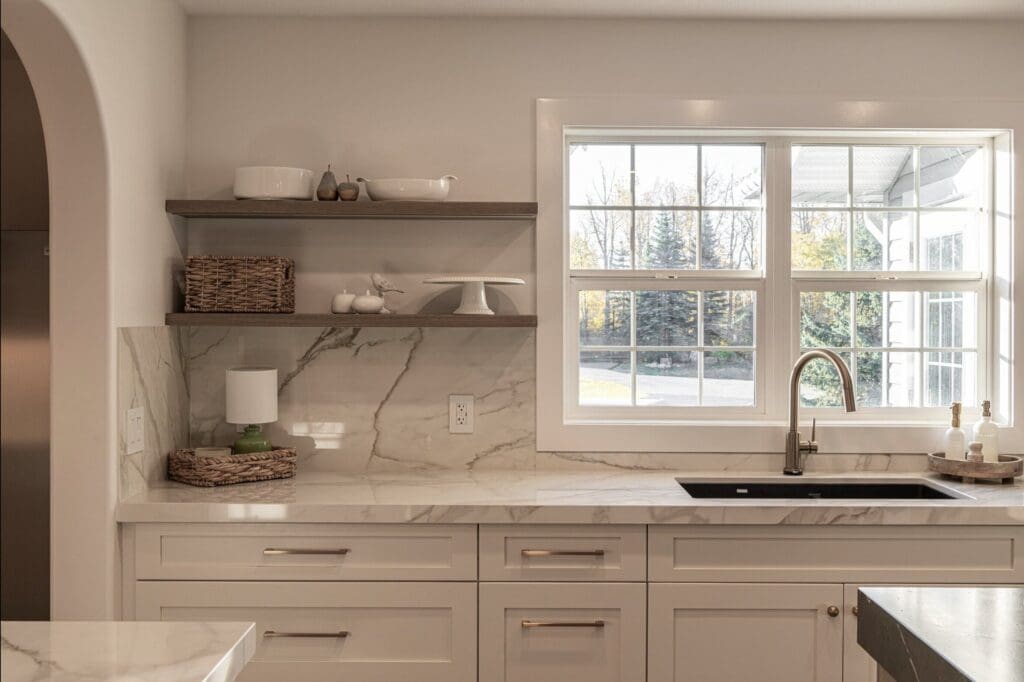
You’re Paying for What We Know, Not Just What We Draw
The thing about designers, like other professionals, though, is that you’re not paying me just for my ability to imagine your home differently, then draw it out. That’s only a small part of the equation.
I pay my accountant not only to “do my taxes”, but to know everything they need to know about tax law and how that applies to me, my family, and my business. I’m expecting that my accountant is staying up to date on the changes that apply to the rules this year and to advise me in my best interest.
You’re really paying a designer for allll of that information that we have in our heads, if those finishes will fit YOUR life, AND to have an idea of how much they cost or gauge if you’d even be interested in paying for them in the first place, based on everything you’ve already told me. That knowledge comes from years of experience, ongoing education, relationships with suppliers and contractors, and seeing what actually happens when the products we specify are installed in real homes.
I know that certain materials look incredible in photographs but might not be the best choice for a family with three kids and a large dog. I know that some finishes are worth spending more money on, while others have excellent, less expensive alternatives.
I also know when something that looks great on paper is going to be a nightmare to maintain.
AI can give you a beautiful picture of a kitchen with quartz countertops. But is it going to have a conversation with you about how you feel knowing that quartz has plastic in it and can yellow if it’s exposed to heat? Probably not.
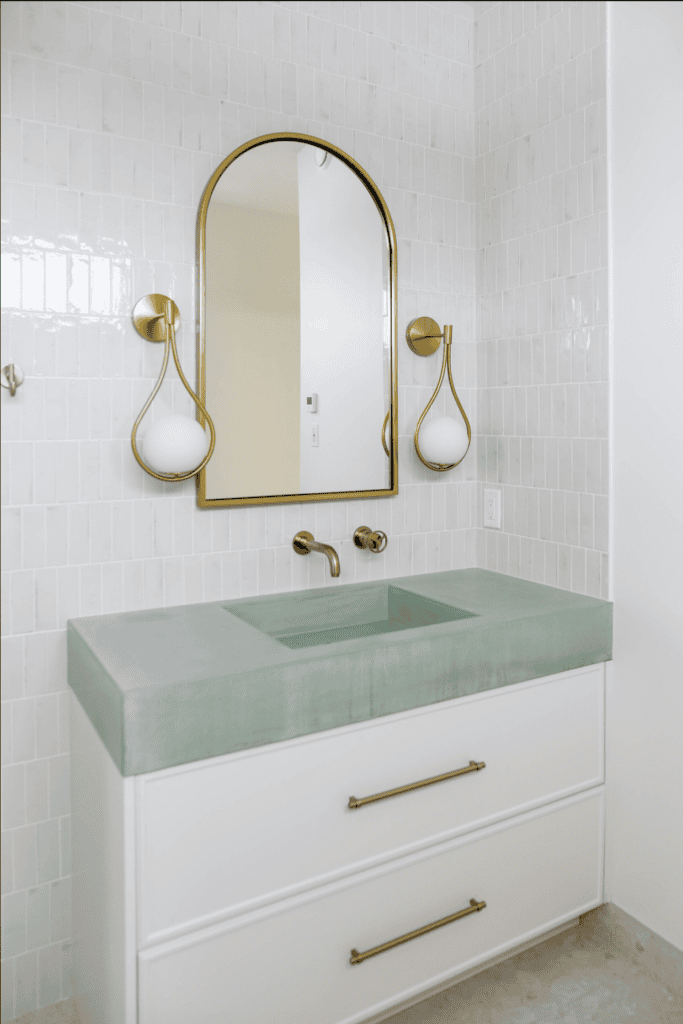
Your Home Isn’t Just a Collection of Pretty Rooms
One of my favourite parts of being an interior designer is getting to know my clients.
I want to know how you live. Do you entertain often? Do your kids do homework at the kitchen island? Does your dog sleep on the sofa even though you insist he’s not allowed? Are you someone who loves to cook, or is the kitchen mostly where you make coffee and unpack takeout? These things matter.
Sometimes what a client initially tells me they want isn’t actually what will work best for their family. That’s where conversations, questions and experience come in. A good designer isn’t just taking your Pinterest board and making it happen. We’re interpreting what you love, understanding what you need, and figuring out how to bring those things together in a way that works for your home and your budget.
And sometimes we’re gently talking you out of something that you’re going to regret.
That’s part of the job too.
So, Will AI Replace Interior Designers?
While AI may be doling out inspiration (often with waaaay too many vases filled with branches and small leaves), it’s always evolving and I don’t think we should dismiss it. I actually think there are some pretty exciting ways that AI can help both homeowners and designers. It can make it easier to explore ideas, visualize possibilities and communicate a general direction before getting into the details. (Yes, I plug my drawings into AI to get a photorealistic interpretation of my drafting.)
It’s another tool in the design process, just like the software we already use to create drawings and renderings. But a tool is different from a complete service.
It’s possible that my career (my passion!) may be replaced with AI, so long as it can fill the voids that designers fill. If it can produce a specifications sheet with real-world products that your contractor can go buy, produce accurate construction drawings, and anticipate the needs of your family, it might be over for designers. I don’t think that’s imminent, but I’ve been pretty taken aback by recent developments in AI.
I do believe that it’s true that the new luxury will be human-made items and human-made art and design, so maybe it will become a much more niche market. There’s something really special about working with someone who understands you, who gets excited about your project, and who genuinely cares about how you feel when you walk into your finished home.
Maybe I’m biased (okay, I’m definitely biased), but I think that human connection is worth something.
For now, there are lots of great designers out there (ahem) who aren’t adding $60,000 to your small renovation project and can see and interpret a heck of a lot more than that chat website or the Facebook “ask people for AI designs for this room” groups.
So by all means, play around with AI. Get inspired. Save the pictures of the beautiful kitchens and living rooms it creates. Just remember that someone still needs to figure out how to actually build them and that’s where we come in.


